Continuous Line Design of Hammer: A Designer’s Real-World Review
First Impressions: Clean, Minimal, and Loaded with Potential
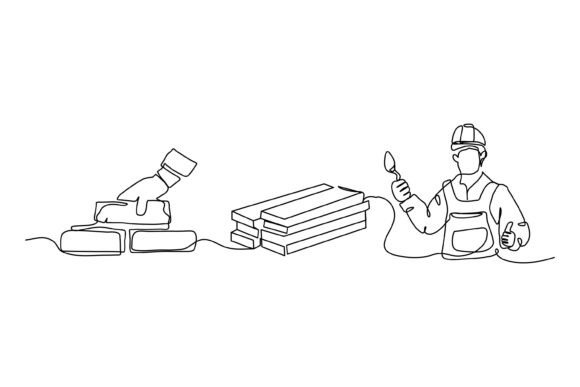
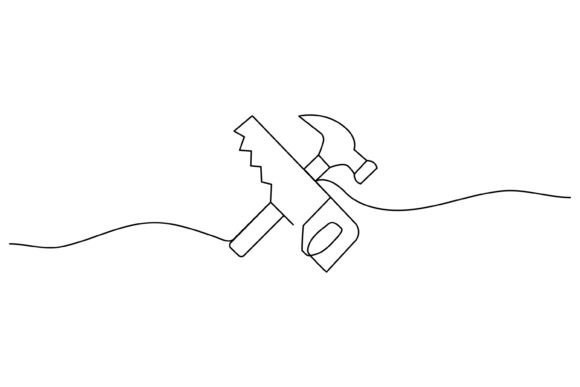
The Continuous Line Design of Hammer strikes me immediately as a minimalist’s dream. It’s a single flowing line that captures the essence of a hammer and saw without overcomplicating the form. There’s a subtle charm in its simplicity—like a doodle that accidentally became art. It reads as a decorative element rather than a literal illustration, which makes it versatile for a variety of projects.
From a design standpoint, this type of graphic works well in modern, rustic, or handcrafted aesthetics. It’s got a subtle hand-drawn feel that makes it feel personal and intentional. The fact that it's drawn on white gives it a clean base, making it easy to adapt to different fabric colors and textures.
Real-World Use: From Tote Bags to Sweatshirts
I recently worked on a custom embroidered tote bag for a client who runs a small woodworking shop. I considered using the Continuous Line Design of Hammer as the central motif. It would’ve looked great on a natural canvas tote—clean, recognizable, and not too busy. The single line nature of the design would translate well into machine embroidery without risking thread buildup or fabric distortion.
For sweatshirts or baby clothes, this design could serve as a quiet statement piece. It’s not overly detailed, so it won’t get lost in the soft folds of a hoodie or the gentle curves of a onesie. On a patch or apron, it would read as a branding element—especially for a small business that wants to subtly communicate craftsmanship.
Visual Personality: Subtle but Memorable
What I appreciate most about this design is its subtlety. It doesn’t scream for attention but invites closer inspection. That kind of quiet confidence is perfect for personalized gifts, boutique products, or Etsy listings where the design should support the product rather than dominate it.
It also has a certain universality. The hammer and saw are instantly recognizable tools, but in this stylized form, they feel less literal and more symbolic. That makes the design adaptable across different themes—craft, DIY, construction, or even a rustic wedding gift for a couple of carpenters.
Where to Use It Carefully
As with any single-line design, there are limitations. If you’re working with a small hoop size, the level of detail might get lost. The thinner lines could become faint or break up on textured fabrics like fleece or denim. Stretchy materials may distort the shape slightly, especially around the more delicate curves of the hammer’s head or the saw’s teeth.
Dark fabrics could also pose a challenge unless you test the design with contrasting thread. A black background might swallow the fine lines unless you use a light thread or add a subtle outline. Also, if you’re embroidering on curved surfaces like caps or mugs with curved embroidery panels, the continuous line might stretch or warp slightly unless the design is digitized with that in mind.
Impact on Product Value and Customer Perception
When it comes to handmade products, presentation matters. The Continuous Line Design of Hammer elevates a simple item into something thoughtful and intentional. It adds a layer of storytelling—especially if the item is meant for someone in a trade or craft. Customers respond well to that kind of detail because it feels personal and meaningful.
For Etsy sellers and small shop owners, this kind of design can help establish brand consistency. Used across packaging, product tags, or promotional mockups, it becomes a visual signature. It’s clean enough to look professional, yet unique enough to stand out in a crowded marketplace.
Practical Notes for Embroidery Designers
If you’re considering using this design in your next project, here are a few practical notes from my experience:
- Test on scrap fabric first—especially if you’re working with textured or stretchy materials.
- Check thread color contrast—the fine lines may disappear on dark or busy fabrics.
- Review stitch density—since it’s a single line, make sure the digitizing doesn’t create thin or broken areas.
- Confirm hoop size—this design may not scale well down to the smallest hoops without losing clarity.
- Use proper stabilizer—especially for stretchy or delicate fabrics to prevent distortion.
- Inspect small details—the curve of the hammer or the teeth of the saw may need reinforcement.
- Test in black and white mockups—this helps you see how the design will look on different backgrounds.
- Compare light and dark fabric backgrounds—the same design can read very differently depending on the base color.
- Check licensing—especially if you’re selling finished products or digital embroidery files.
Final Thoughts: A Thoughtful Design for Real Projects
The Continuous Line Design of Hammer is more than just a decorative graphic—it’s a functional design element that can work across a variety of real-world embroidery projects. Whether you're creating custom apparel, personalized gifts, or small business merchandise, this design brings a quiet sophistication that feels handmade without being overly fussy.
It’s the kind of design that makes you stop and appreciate the simplicity of good craftsmanship—both in the tool it represents and in the way it’s stitched into fabric. For designers and sellers looking to add a subtle but meaningful touch to their products, this one’s worth considering.